Motorsport’s new powertrain crossroads (and why it matters to you)
Motorsport isn’t just deciding which drivetrain wins races—it’s shaping what enthusiasts will wrench on, what tracks will allow, and what sponsors want to be associated with. If you’re building a track-day car, running a club series, or managing a team budget, the “powertrain choice” is no longer a given. Today you can realistically choose between three paths:
- Modern internal combustion (ICE) running pump fuel, race fuel, or E85
- Battery-electric (EV) for sprint events and time attack-style formats
- Hydrogen (either fuel cell or hydrogen-combustion) as an emerging—but very real—motorsport option
This comparison is aimed at the practical questions Lasco Motorsport readers ask: What’s faster in the real world? What breaks? What’s cheaper over a season? What will still be allowed in five years? Let’s stack the options up using actionable criteria and real-world examples.
Option 1: ICE on pump fuel, race fuel, or E85 — the “known quantity”
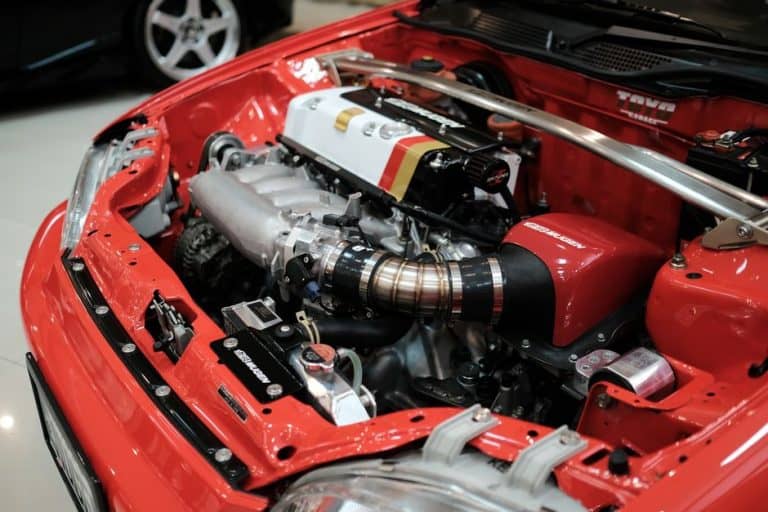
ICE remains the most accessible path for grassroots motorsport, from track days to time attack to endurance racing. The reason is simple: infrastructure already exists, parts are plentiful, and most tracks know how to manage the safety requirements.
Performance & consistency
For lapping consistency over 20–60 minutes, a well-cooled turbo or naturally aspirated build can be extremely repeatable. Refuel times are short, and power delivery is predictable once tuned.
- Strength: consistent performance over long sessions if cooling is right
- Weakness: heat management (oil temps, charge temps), especially in high-boost applications
Actionable tip: If your lap times fade after 3–5 hard laps, don’t chase more boost first. Log IAT, oil temp, coolant temp, and ignition timing. Often a larger intercooler, ducting, and oil cooling deliver more lap time than power.
Cost to build and run
Costs vary wildly, but ICE still offers the broadest range from budget builds to pro-level engines. For a track-day driver, it’s common to spend more on tires and brakes than on fuel over a season—especially in shorter events.
- Budget reality: consumables (pads, rotors, tires) often dominate costs
- Tuning reality: safe power is cheap; safe heat control is what you pay for
Reliability & serviceability
ICE is easiest to troubleshoot at the track. You can swap coils, sensors, hoses, or even an engine relatively quickly compared to rebuilding an EV pack or dealing with hydrogen systems.
Actionable tip: If you’re serious about finishing events, build a “failure kit” with:
- coil packs and plugs
- spare belts, clamps, and silicone couplers
- fluids (oil, coolant), a spare MAF/MAP sensor
- pre-torqued spare brake pads (ready to drop in)
Real-world example: E85 for track consistency
E85 remains a popular choice because its cooling effect and knock resistance can reduce detonation risk under sustained load. The trade-offs: fuel consumption increases (often 20–30% more), and cold starts/storage can be fussier depending on your setup.
Option 2: EV — instant torque, brutal repeatability challenges
EVs have moved from “experiment” to “serious competitor,” especially in sprint formats. The big question for many track-day drivers: are EVs fun and fast without turning every session into a thermal-management puzzle?
Performance & lap-time potential
EVs deliver instant torque and strong acceleration, often making them devastating in short bursts—hill climbs, autocross, short time-attack sessions, and certain sprint races. Their challenge is maintaining that performance lap after lap without power limiting.
- Strength: acceleration and torque-fill out of corners
- Weakness: heat and power derating when the battery or motor hits thermal limits
Actionable tip: If you’re considering an EV for track use, choose an event format that matches EV strengths: short sessions (5–10 minutes) with cooling breaks often outperform “open pit lane for 30 minutes.”
Charging, logistics, and track infrastructure
EV motorsport logistics can be the make-or-break factor. A fast car is useless if you can’t reliably recharge between sessions. Many circuits are adding charging, but it’s not universal and it can be costly to install for a private team.
- Best case: onsite DC fast charging or a dedicated paddock power solution
- Worst case: limited AC power and long turnarounds that reduce seat time
Practical checklist before committing:
- Does the venue have DC fast charging, and is it accessible on event days?
- What’s the local grid/paddock power limit?
- What’s your realistic charging time from 20% to 80%?
- Can your driving plan fit the energy budget (especially with aero and sticky tires)?
Costs: fewer consumables, different expensive parts
EVs can reduce certain consumables (no oil changes, fewer drivetrain wear items), but they can introduce high costs elsewhere (battery degradation, cooling upgrades, motors/inverters). Tires and brakes are still major line items—sometimes more so due to vehicle mass.
Actionable tip: Factor in brake fluid and pad temperature management even with strong regen. Track braking events can exceed what street-oriented regen tuning expects. High-temp fluid is still non-negotiable.
Real-world example: EV sprint racing momentum
Top-level EV racing has proven the concept for close competition and quick acceleration. Coverage of EV series and technology developments has become mainstream news, and outlets like BBC Sport’s motorsport coverage can be useful for following how regulations, safety standards, and race formats are evolving.
Option 3: Hydrogen — high promise, but you’re early
Hydrogen in motorsport is trending because it offers a potential path to lower-carbon racing with fast refueling and familiar “race car” vibes. But there are two very different hydrogen routes, and they matter for your expectations:
- Hydrogen fuel cell (FCEV): hydrogen generates electricity onboard to power an electric drivetrain
- Hydrogen internal combustion (H2-ICE): hydrogen is burned in a modified ICE engine
Performance & feel
H2-ICE can preserve sound, shifting, and mechanical engagement closer to traditional racing. Fuel cells lean more toward EV characteristics: quiet, torquey, and system-heavy.
- H2-ICE strength: familiar motorsport sensation and fast refueling potential
- Fuel cell strength: efficiency and potentially smoother power delivery
- Shared weakness: system packaging and safety complexity
Infrastructure is the big gatekeeper
Hydrogen’s biggest barrier isn’t horsepower—it’s access. Transporting, storing, and dispensing hydrogen safely at an event requires specialized equipment, trained staff, and approvals. That’s manageable at manufacturer-backed demos and select series, but it’s not yet “show up with jerry cans” simple.
Actionable tip: If you’re evaluating hydrogen as a team manager, start by pricing the logistics package (delivery, storage, dispensing, safety officer) before you price the car. The operational plan often dictates feasibility more than the vehicle cost.
Costs and complexity
Hydrogen programs can be capital-intensive due to storage tanks, regulators, sensors, and safety systems. Early adopters should expect higher costs and more engineering time, but also potential sponsor interest because hydrogen is a high-visibility sustainability story.
Real-world example: manufacturer demonstrations
Several manufacturers have showcased hydrogen concepts (both H2-ICE and fuel cell) around endurance-style events to validate refueling speed, thermal stability, and safety protocols. These programs are important signals: hydrogen is not science fiction—but it is still “early stage” for privateer budgets.
Head-to-head comparison: which powertrain fits which racing goal?
1) Best for maximum seat time per dollar
- Winner: ICE (especially a mild, reliable setup)
- Why: fast refuel, easy repairs, wide parts availability, minimal infrastructure needs
2) Best for short, violent speed (sprints, hill climbs, autocross)
- Winner: EV
- Why: instant torque and strong repeatable launches—if you manage heat
3) Best for future-facing sponsorship and tech storytelling
- Winner: Hydrogen (with caveats)
- Why: emerging tech narrative, but requires serious operational planning
4) Best for endurance-style events today
- Winner: ICE (with EV improving rapidly)
- Why: refuel speed and proven thermal reliability; EV endurance depends heavily on charging and ruleset
Choosing the right path: a simple decision framework
If you’re torn, decide based on your event format and your constraints, not ideology.
- If your track sessions are 20–30 minutes and you value consistent laps: choose ICE or a very track-ready EV with proven cooling.
- If your events are short and measured (time attack, autocross): EV becomes very compelling.
- If you want to be an early mover with sponsor appeal and can handle logistics: explore hydrogen, ideally with manufacturer/series support.
Pro tip for any option: Don’t start by chasing peak horsepower. Start by budgeting for heat management, brakes, tires, and data logging. Most lap-time gains in real track use come from staying in the performance window longer, not spiking a dyno number.
Conclusion: Motorsport’s future is plural—pick the tool that fits the job
The most interesting shift in motorsport right now is that there isn’t one “correct” powertrain anymore. ICE remains the most practical choice for many grassroots racers because it’s serviceable, infrastructure-ready, and cost-flexible. EVs are already lethal in sprint formats, but demand serious attention to thermal management and charging logistics. Hydrogen is the intriguing frontier—especially for teams chasing innovation and narrative—but it’s still infrastructure-limited and best approached with a clear operational plan.
For Lasco Motorsport readers, the winning move is aligning your build with your race format and your reality: how long you run, where you race, how you refuel or recharge, and what you can fix at the track. Choose the platform that maximizes usable laps, not just peak output—and you’ll be faster, safer, and happier all season.