9 Smart Motorsport Data Habits That Make Amateur Drivers Faster (Without More Horsepower)
Speed in motorsport isn’t only about spending more on power or aero. More often, it’s about building repeatable habits around data: what you measure, how you review it, and how you turn it into better decisions on track.
This article is for club racers, track-day regulars, and sim-to-track drivers who want practical, modern ways to get quicker and more consistent. None of these require a full race engineer or a six-figure budget—just a structured approach and a willingness to learn.
1) Pick a “Baseline Lap” and Protect It
The fastest way to confuse yourself is to compare today’s best lap (in perfect conditions) to last month’s average lap (in mixed conditions) and assume you’ve improved—or gotten worse. Instead, create a baseline lap: a representative, repeatable lap time and data trace you can reliably achieve when the car and track are normal.
How to do it:
- Choose a session with stable traffic and consistent temps.
- Save one lap that is within ~0.5–1.0% of your typical pace (not a hero lap).
- Use this lap for comparisons when you change one variable (tyre pressures, pads, line, etc.).
Real-world payoff: Drivers often chase “one lap” improvements and miss that their median pace hasn’t moved. A protected baseline makes your progress measurable and keeps your setup changes honest.
2) Use a Three-Number Dashboard: Consistency, Not Just Peak
If you only look at best lap, you miss the story. Build a mini dashboard after every day:
- Best lap (peak potential)
- Median lap (your true pace)
- Standard deviation or spread (consistency under pressure)
Actionable tip: Export lap times into a spreadsheet. If you don’t want to calculate standard deviation, just record the time gap between your 3rd-best and 10th-best laps. Shrinking that gap usually means you’re learning faster than chasing a single purple lap.
Example: Two drivers both run a 1:52.0 best lap. Driver A’s median is 1:52.7; Driver B’s median is 1:54.0. Driver A is typically the one who races better, manages tyres better, and makes fewer mistakes when it counts.
3) Stop Over-Logging: Record Only What You Can Improve
Modern loggers and apps can capture huge datasets. The problem is analysis paralysis. Most amateurs improve fastest when they focus on a short list:
- GPS speed trace (where you’re gaining/losing)
- Brake pressure (or brake on/off) (braking timing, release)
- Throttle position (commitment, partial throttle habits)
- Steering angle (over-driving, corrections)
- Tyre pressures/temps (repeatability, setup direction)
Practical rule: If you can’t describe what you’ll change based on a channel, don’t log it yet. Add complexity only after you’ve “mastered” the basics.
4) Build a “Corner Library” Instead of Chasing Full-Lap Perfection
Most lap time comes from a handful of corners: the ones that lead onto long straights, the heavy braking zones, and the corners that you consistently misjudge. Create a corner library with:
- Video clip (10–15 seconds) of the corner
- Your fastest representative pass
- Your most consistent pass
- Notes: gear choice, braking marker, turn-in cue, apex reference
Actionable tip: Name the files consistently (e.g., “Track_Turn5_Fast_2026-07-01.mp4”). Over time, you’ll see patterns: turning in too early when tired, braking earlier when following traffic, or adding steering mid-corner when you’re anxious.
5) Learn “Brake Release Speed” (The Hidden Time Everyone Ignores)
Many drivers focus on braking later. Often the bigger gain is how you release. A good brake release keeps the front loaded just enough to rotate the car without scrubbing speed or destabilizing it.
What to look for in data:
- A smooth, progressive drop in brake pressure as steering input increases
- Fewer oscillations (no on/off stabs)
- Earlier return to maintenance throttle or balanced coasting
Track-day drill: Pick one corner and do three laps focusing only on release. Don’t move the braking marker at all. Try to make the brake trace “cleaner” each lap. This often improves minimum speed and exit speed without riskier late-braking.
6) Use “Delta Awareness” Only in Short Bursts
Live delta timing is powerful—and distracting. If you stare at a delta screen all lap, you can drive tense, chase ghosts, and ignore real signals like tyre feel or traffic. Use delta as a targeted tool.
How to apply it:
- Turn on live delta only for 2–3 laps after a change (pressure tweak, line adjustment).
- Then turn it off and drive on feel for a longer stint to build repeatability.
- Review the data afterward; don’t try to analyze mid-lap.
Why it works: You get the motivational “is this faster?” feedback without letting delta timing hijack your attention for an entire session.
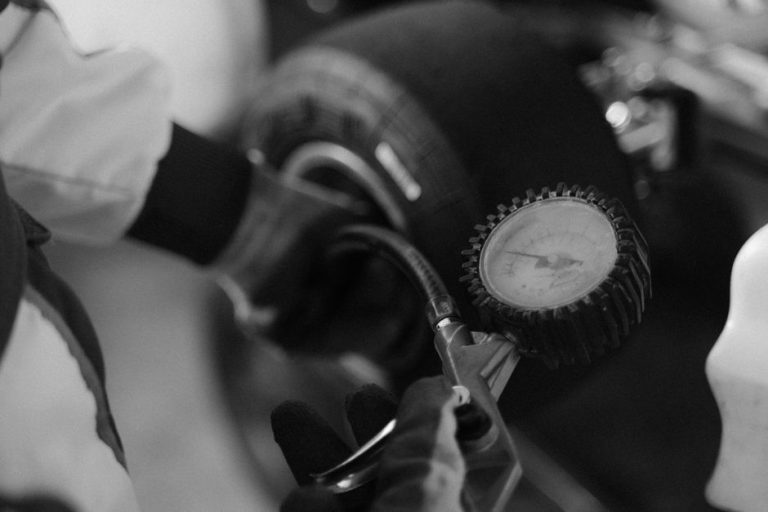
7) Treat Tyre Pressures Like a Science Experiment
Tyre pressures are one of the highest ROI adjustments in grassroots motorsport, and they’re often done randomly. A simple experimental approach can uncover speed and consistency.
Actionable method:
- Record cold pressures, hot pressures (immediately after coming in), ambient temp, and lap count.
- Change only one axle at a time (front or rear), and only by small steps (e.g., 1 psi / 0.1 bar).
- Evaluate based on median lap and corner-specific notes (understeer on entry? traction on exit?).
Data point to remember: A pressure change can affect not just grip, but heat build-up, steering response, and braking stability. Keeping records over multiple events helps you predict what the car will want on a hotter or colder day.
8) Build a “Fatigue Check” Into Your Data Review
Performance isn’t linear throughout a day. Many drivers get slower not because the car changes, but because they do—hydration, heat, stress, and concentration.
What to track:
- Lap time trend over a stint (do you fade after lap 5?)
- Mistake frequency (missed apexes, lock-ups, traction events)
- Heart rate (if you have a wearable) and notes on focus
Practical tip: If your pace drops off consistently, shorten stints and recover between them. Fast drivers often look “relaxed” because they manage their mental and physical load like part of the setup.
For a broader look at how elite sport treats marginal gains, it’s worth reading analysis and reporting from mainstream outlets like The Guardian’s sports coverage, which frequently explores performance factors beyond raw talent—training, psychology, and the small decisions that compound over time.
9) Write Setup Notes Like a Future You Will Thank You For
Setup notes that say “car felt bad” are useless a month later. Great notes are specific, repeatable, and linked to conditions.
Use this template:
- Conditions: ambient temp, track temp (if known), wind, session time
- Car state: tyre type/age, fuel load estimate, brake pad condition
- Symptom: “entry understeer in medium-speed corners”
- Location: “Turns 3 and 7”
- Trigger: “when trail braking past the 2 board”
- Change: “front +1 psi” or “rear rebound +2 clicks”
- Result: median lap improved by 0.3s; exit traction worse in T10
Why this is powerful: You’ll start seeing repeat patterns across tracks—like a tendency to over-slow hairpins, or a setup direction that always hurts tyre life. That’s where real driver development happens.
Conclusion: The Fastest Upgrade Is a Better Feedback Loop
Motorsport rewards the drivers who learn the quickest, not just the ones with the biggest budgets. If you adopt even a few of these data habits—protecting a baseline lap, tracking consistency, focusing on brake release, and keeping meaningful setup notes—you’ll build a feedback loop that keeps paying you back every event.
At Lasco Motorsport, we love the shiny stuff as much as anyone, but the real magic is when your driving, your data, and your decisions start working together. Do that, and you’ll find lap time in places you didn’t even realize you were giving it away.