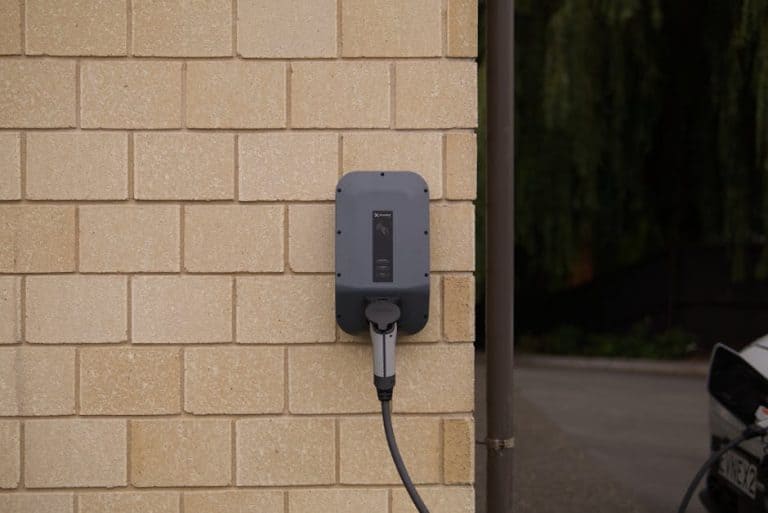
EV charging is getting weird (in a good way)
EV ownership used to be a simple question: “Can I charge at home?” Now it’s a whole menu. You’ve got smart Level 2 home chargers with load balancing, increasingly common public fast chargers with memberships and peak pricing, workplace charging perks, destination chargers at hotels, and even the not-quite-mainstream-but-real battery swap model in some markets.
If you’re shopping for an EV (or you already drive one and want to stop playing “range roulette”), this comparison breaks down three practical approaches to keeping your EV topped up in 2026:
- Home charging (Level 1/Level 2)
- Public DC fast charging
- Battery swapping
We’ll compare them on cost, time, convenience, battery health, and real-world use cases—then wrap it up with a simple “which one fits your life” checklist.
Option 1: Home charging (Level 1 vs Level 2)
What it is
Level 1 is the slow “regular outlet” method (often 120V in North America). Level 2 is a dedicated 240V setup that usually requires a properly installed circuit and wall box (or a plug-in EVSE).
Time: the overnight advantage
- Level 1: typically adds about 3–5 miles of range per hour depending on the car and outlet limits. Great for low-mileage commuters; painful for road warriors.
- Level 2: commonly adds about 20–35 miles of range per hour. Many EVs can go from 20% to 80% while you sleep.
Actionable tip: if you drive under ~30 miles a day, Level 1 can actually work—especially if you can plug in every night. If you regularly drive 50–100 miles a day, Level 2 is where life gets easy.
Cost: usually the cheapest “fuel” you can buy
Home charging cost depends on your electricity rate and your EV’s efficiency. A decent real-world benchmark is:
- Typical efficiency: ~3–4 miles per kWh (many crossovers land in this range)
- Cost per 100 miles: if power is $0.15/kWh and you average 3.3 mi/kWh, that’s about $4.55 per 100 miles
Installation is the big upfront variable. A straightforward Level 2 install can be “easy money” or a surprise expense depending on panel capacity, distance to the garage, trenching needs, and local permits.
Actionable tips to avoid install pain:
- Ask for a quote that includes permit, breaker, wire gauge, and load calculation.
- Consider a charger with load management if your panel is near capacity (it can throttle charging instead of forcing a panel upgrade).
- If you’re renting, ask about a plug-in Level 2 (NEMA outlet) solution—often easier to approve than hardwiring.
Convenience: the underrated win
Home charging isn’t “fast,” but it’s always there. No waiting, no app drama, no “charger occupied” surprise. For most owners, home charging is the single biggest quality-of-life upgrade.
Battery health: generally friendly
Most battery chemistries prefer slower charging and moderate states of charge. Home Level 2 charging is typically gentler than repeated high-power DC fast charging. If you want to be extra kind to the pack:
- Set a daily charge limit (often 70–80% for many EVs; follow your manufacturer guidance).
- Only go to 100% right before longer trips.
- Use scheduled charging so the battery finishes closer to departure time, especially in extreme heat or cold.
Option 2: Public DC fast charging (road-trip hero, daily wildcard)
What it is
DC fast chargers (sometimes called Level 3) bypass the car’s onboard AC charger and feed the battery directly at high power. They’re the reason EV road trips are now totally doable—when the station is reliable and the car can accept high charge rates.
Time: fast… but not always “gas-station fast”
The best-case scenario is great: many modern EVs can add 100–200 miles in ~15–30 minutes on a high-power charger, depending on battery size, temperature, and the car’s charging curve.
But real life adds friction:
- Charging curve reality: speeds often slow down after ~60–80%.
- Battery temperature: cold batteries can charge slowly unless preconditioned.
- Station congestion: waiting 10–25 minutes for a stall can happen at peak times.
Actionable tip: On trips, aim for “shorter, more frequent” stops—charging from 10–60% is often quicker than 40–90%. Your navigation’s route planner can help, but it’s worth understanding the basic logic.
Cost: can range from reasonable to eye-watering
Public fast charging pricing varies by provider, membership, time of day, and region. Some charge per kWh, some per minute, and some add idle fees. It’s common for DC fast charging to cost 2–4× more per mile than home charging in many areas—sometimes rivaling efficient gasoline cars on cost per mile.
If you want a sanity check on broader electricity pricing and the consumer impact of energy costs, mainstream reporting like The Guardian’s energy coverage can be a useful context resource when you’re comparing home rates vs public charging prices and policy changes.
Convenience: amazing for travel, inconsistent for daily life
If you can’t charge at home, you might be tempted to use DC fast chargers like a weekly “refuel.” Some people do it successfully, but it’s not always smooth. What helps:
- Choose a route with multiple networks nearby, not just one station.
- Use apps that show real-time stall status and recent check-ins.
- Know your car’s best charging power and the stations that can actually deliver it.
Battery health: fine in moderation, not ideal as your only plan
Modern EVs manage fast charging well, and batteries are designed for it. Still, frequent high-power charging can increase heat and stress. Practical middle ground:
- Use DC fast charging primarily for trips and occasional top-ups.
- When you do fast charge, try to arrive with a low state of charge (faster) and leave before the last slow “top-off” portion.
Option 3: Battery swapping (the “pit stop” approach)
What it is
Battery swapping replaces your depleted pack with a charged one in a dedicated station—kind of like motorsport service, but for energy. It’s not widely available everywhere, but it’s a real, functioning model in certain regions and fleets.
Time: potentially the fastest “charge” you’ll ever do
When it’s fully automated and standardized, a swap can take around 3–10 minutes. That’s the big headline benefit: consistent, quick turnaround without waiting for charging curves or cold batteries.
Cost: subscription-like, depends on the ecosystem
Swapping typically comes with a membership or battery-as-a-service model. Instead of owning the battery outright, you may effectively pay for access to energy and battery maintenance. This can make budgeting simpler, but it’s heavily dependent on:
- Local station density
- Swap pricing and subscription tiers
- How battery “ownership” and warranty are structured
Convenience: unbeatable if you live inside the swap network
If your commute and travel patterns stay within the station network, swapping is ridiculously convenient. If you step outside that network, it can become a non-starter. This is the “ecosystem lock-in” trade-off.
Battery health: often great (because someone else manages it)
One of the sneaky benefits is that the operator typically manages battery health, temperature control, and charging rates behind the scenes. In theory, this can mean:
- Less exposure to extreme fast charging
- Better overall pack lifecycle management
- Reduced anxiety about long-term degradation
The flip side is psychological: some drivers dislike the idea of getting a different battery each time. In well-run programs, packs are tested and graded, but transparency matters.
Head-to-head comparison: which approach wins where?
1) Cheapest per mile
- Winner: Home charging (Level 2), especially with off-peak rates
- Runner-up: Home Level 1 (cheap, but slow)
- Usually highest cost: Public DC fast charging
2) Fastest “back on the road” time
- Winner (when available): Battery swapping
- Runner-up: DC fast charging on a high-power station with a warm battery
- Slowest: Level 1 home charging
3) Best for daily life
- Winner: Home Level 2 (set-and-forget convenience)
- Runner-up: Workplace charging (if you have it) paired with occasional public charging
- Situational: Swapping (only if stations are abundant where you drive)
4) Best for apartments and renters
- Winner: A reliable nearby public charging mix (DC fast + Level 2 destination)
- Potential future winner: Battery swapping in markets where it scales
- Hard mode: Home charging without dedicated parking
Real-world scenarios (so you can actually pick one)
Scenario A: Suburban commuter with a garage (30–60 miles/day)
Best setup: Home Level 2 + occasional DC fast charging for road trips.
Why: You’ll wake up “full,” avoid public pricing, and your EV will spend less time sitting at high states of charge if you use scheduled charging and a sensible daily limit.
Scenario B: City driver with street parking (10–25 miles/day)
Best setup: Mix of destination Level 2 (gym, grocery, cinema) + occasional DC fast charging.
Tip: Build a “charging routine” around places you already go. Two 90-minute Level 2 sessions per week can be enough for many light-mileage drivers.
Scenario C: Gig work / high-mileage driver (150–250 miles/day)
Best setup: Home Level 2 if possible + strategic DC fast charging. If you’re in a swap-supported market, swapping can be a game-changer.
Tip: Learn your EV’s sweet spot: many cars recharge fastest from roughly 10–60%. Optimize stops around that window to reduce downtime.
Buying/ownership checklist (quick but useful)
- Do you have dedicated parking with electrical access? If yes, prioritize Level 2 at home.
- Do you road trip monthly? Choose an EV with strong fast-charging curves and good route planning.
- Is your local public network reliable at peak hours? Test it before committing to “no home charging.”
- Do you live in a swap-enabled ecosystem? Run the math on subscription vs electricity and check station density along your routes.
- Do you have time-of-use rates? Schedule charging for off-peak and compare real savings over a month.
Conclusion: the smartest plan is usually a blend
In 2026, the best EV charging strategy isn’t one-size-fits-all—it’s “what fits your week.” For most drivers, home Level 2 is still the king of convenience and low running costs. Public DC fast charging is the essential road-trip tool and a workable backup if you can’t charge at home (as long as your local stations are dependable). And battery swapping is the ultra-fast wildcard: unbeatable inside the right network, irrelevant outside it.
If you want the least stress, aim for this hierarchy: home charging first, fast charging for travel, and swap only if your region supports it well. Build around your routines, track your real costs for a month, and you’ll end up with an EV experience that feels effortless rather than experimental.