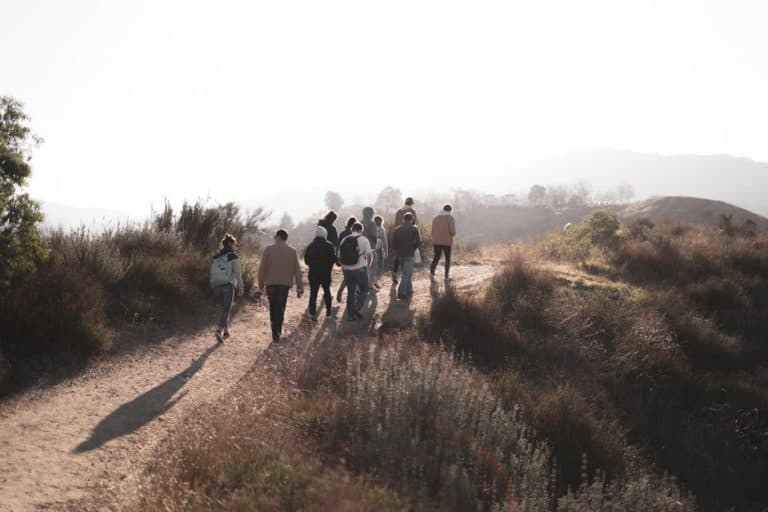
Not every great story starts with plane tickets or a week off. Some start in the 15 minutes you thought you didn’t have—between a meeting and dinner, between school pickup and an evening chore, or during that familiar “scroll time” when you reach for your phone without thinking.
Micro-adventures are trending for a reason: they’re small, local, low-cost, and surprisingly effective at restoring energy and attention. The trick is turning them from an occasional lucky idea into a simple routine you can actually keep. This post shows you how to build a repeatable 15-minute micro-adventure habit—complete with real-world examples, a lightweight planning system, and tips for making it stick.
What counts as a micro-adventure (and what doesn’t)
A micro-adventure is a short, intentional experience that feels distinct from your normal day. It creates a clear “before/after” moment—like you briefly stepped outside the script.
It does not need to be extreme. It does need to be deliberate. Watching another episode because you’re tired might be relaxing, but it usually isn’t an adventure because it doesn’t change your perspective or environment.
Micro-adventures often include at least one of these:
- A new route (even one street different)
- A small skill (identify a bird call, learn a knot, try a new camera setting)
- A “mission” (find the best sunset view within 2 km, locate a hidden mural)
- A sensory anchor (taste something new, listen to ambient sound, smell a local bakery)
- A social twist (invite one person, ask one question, share one tiny discovery)
Why 15 minutes is the sweet spot
Longer adventures are great, but they require scheduling, money, and recovery time. Fifteen minutes has special power because:
- It’s friction-light: you can fit it into most days without negotiating with your calendar.
- It builds consistency: habits form through repetition more than intensity.
- It interrupts autopilot: even short novelty helps break “same day, repeat” fatigue.
Many people underestimate what 15 minutes can do. That window is enough to walk to a viewpoint, explore two streets you’ve never taken, visit a local shop, do a mini photo challenge, or watch the sky change at dusk.
The Micro-Adventure Routine (simple enough to keep)
Here’s a practical structure you can use daily or a few times a week. Think of it as a “minimum effective dose” of variety.
Step 1: Pick a category (60 seconds)
Use categories so you don’t burn energy brainstorming from scratch.
- Nature: trees, rivers, clouds, parks, sunsets
- Neighborhood: architecture, hidden alleys, public art
- Food: new snack, new spice, one new café item
- Skill: photography, navigation, sketching, journaling
- People: a short call, a shared walk, a question to a local business owner
Step 2: Add one constraint (30 seconds)
Constraints make adventures easier, not harder. Choose one:
- Distance: “within a 10-minute walk”
- Time: “only until my next meeting”
- Tool: “phone camera only” or “no phone at all”
- Theme: “red objects,” “water,” “old signage,” “shadows”
Step 3: Make it a mission (30 seconds)
Turn your idea into a quest. Missions create momentum.
- “Find the quietest spot within 800 meters.”
- “Photograph three reflections.”
- “Locate one building detail I’ve never noticed.”
- “Try a local snack I can’t pronounce.”
Step 4: Document one thing (optional, 2 minutes)
Documentation makes the memory stick, but keep it tiny:
- One photo
- One sentence
- One map pin saved as “Micro-adventure: [date]”
Real-world micro-adventures you can copy this week
Below are specific, plug-and-play examples. No special gear required.
1) The “Wrong Turn” Walk (Neighborhood)
On purpose, take one wrong turn on a familiar route. Walk for 7 minutes, then turn back. Your mission: find one thing you’ve never seen—an old sign, a community garden, an unusual gate, a hidden café.
Actionable tip: If you’re short on time, set a timer for 6 minutes out, 6 minutes back, and 3 minutes to note what you found.
2) Sunset Scouting (Nature)
Pick two nearby spots (parking lot edge, footbridge, hill, rooftop access where legal). Visit Spot A today and Spot B tomorrow. Mission: rate each for wind, view, and “quiet score.”
Data point to track: Keep a simple note: “Best sunset spot so far: [location] / [why].” Within two weeks, you’ll have a personal shortlist.
3) One-Ingredient Challenge (Food)
Choose one ingredient you don’t normally use—sumac, smoked paprika, tahini, kimchi, a new fruit. Mission: buy the smallest amount possible and use it in one easy way (sprinkle, spread, stir-in).
Practical tip: Ask the shopkeeper, “What’s the simplest way people use this at home?” Most will happily give a 10-second recipe.
4) The “3 Textures” Photo Hunt (Skill)
Mission: take three photos, each capturing a different texture—rust, glass reflections, tree bark, wet pavement, fabric. This trains attention and gets you moving.
Make it harder: One texture must be something natural, one must be man-made, and one must be in motion (water, people, leaves).
5) The Local History Ping (People/Neighborhood)
Walk into a local business that’s been around a while (barber, hardware store, diner). Mission: ask one question: “What’s changed most in this area over the years?”
Why it works: You’ll often get a surprising mini-oral-history moment, and it builds community connection without a long commitment.
How to make micro-adventures stick: a 2-week plan
The biggest barrier isn’t time—it’s decision fatigue. Here’s a lightweight system that removes daily choosing.
Build a “Micro-Adventure Menu” (10 minutes once)
Write a list of 12 ideas (like the ones above). Put them in your Notes app. Divide them into three effort levels:
- Level 1 (easy): no gear, no travel, can do in normal clothes
- Level 2 (medium): requires a small stop (shop, park) or a bit more walking
- Level 3 (bold): involves a new place, a new social interaction, or a small skill challenge
Schedule it like a meeting (but smaller)
Pick three days a week for 15 minutes. Attach it to something you already do:
- After lunch
- After work, before going inside
- After school pickup
Tip: Name the calendar entry “15-minute reset” rather than “walk” to keep it flexible.
Track the “after” feeling, not the steps
Fitness trackers are great, but micro-adventures are about the mental shift. After each one, rate:
- Energy (1–5)
- Stress (1–5)
- Curiosity (1–5)
In two weeks you’ll see which adventures genuinely restore you—and which are just “another task.” Keep the restorers.
Using news and culture as adventure fuel (without doomscrolling)
One reason micro-adventures are catching on is that people want to feel connected to the world again—but not trapped in infinite feeds. Try converting passive consumption into a tiny mission.
For example, if you read an article about city green spaces, turn it into: “Find one overlooked green corner near me.” Or if you read about a local event, make it: “Walk by that venue and learn what’s on this week.”
If you want a broad, reliable source for current events and lifestyle features that can spark ideas, scan a headline or two from The Guardian and convert one story into a 15-minute local mission. The key is to stop after one trigger—then go do something real.
Common obstacles (and how to beat them)
“I’m too tired.”
Pick a Level 1 adventure: step outside and listen for three distinct sounds; take a 10-minute slow walk; sit somewhere new. The goal is gentle novelty, not effort.
“My area is boring.”
Boredom is often familiarity. Add constraints: “Find five circles,” “Find the oldest-looking door,” or “Only walk streets I’ve never used.” Your brain starts noticing again.
“I don’t want to spend money.”
Most micro-adventures are free. If food missions tempt you, set a hard rule: one new item under a small budget, once a week.
“I’m glued to my phone.”
Turn the phone into a tool instead of a trap: use it only for a timer, a single photo, or a map pin. Or try a “no phone unless lost” rule.
Conclusion: small adventures, big payoff
Micro-adventures aren’t about pretending your everyday life is a travel documentary. They’re about reclaiming small pockets of time that would otherwise disappear into autopilot. With a simple routine—category, constraint, mission—you can create moments that feel vivid, personal, and surprisingly restorative.
Try it for two weeks. Keep the adventures that raise your curiosity score, ditch the ones that feel like chores, and build your own local list of tiny escapes. You don’t need more time. You just need a repeatable way to use the time you already have.