9 Data-Driven Ways Club Racers Can Cut Lap Times Without Buying More Power
Horsepower is the glamorous fix, but most club racers and track-day regulars leave chunks of lap time on the table with the car they already have. The fastest gains often come from repeatable process: using data, controlling variables, and making changes you can validate. Below are nine specific, less-talked-about (but highly effective) ways to find speed—without chasing big power upgrades.
Each tactic is designed for real-world motorsport budgets and typical weekend constraints. Pick two or three, apply them for a month, and you’ll usually see more progress than a year of random parts.
1) Build a “Brake Release Map” (Not a Brake Marker)
Many drivers can tell you where they brake. Far fewer can describe how they release the brake. Yet brake release is where you win time: it sets front grip, rotation, and minimum speed.
- Actionable drill: For three sessions, keep your brake marker constant, and focus only on releasing the brake smoothly (tapering pressure) while maintaining a stable steering rate.
- Data cue (even with basic tools): If you have GPS data, look at speed trace into the apex. A smoother release often shows a higher minimum speed and less “V-shape” cornering.
- Practical example: In medium-speed corners, a clean release can be worth 0.1–0.3s per corner because the car rotates sooner and you can pick up throttle earlier without understeer.
Tip: Film your feet. A cheap cabin camera aimed at the pedals often reveals you’re coming off the brake too abruptly, which spikes understeer and costs exit speed.
2) Measure Tire Temperatures Across the Tread—Then Adjust Driving, Not Just Pressures
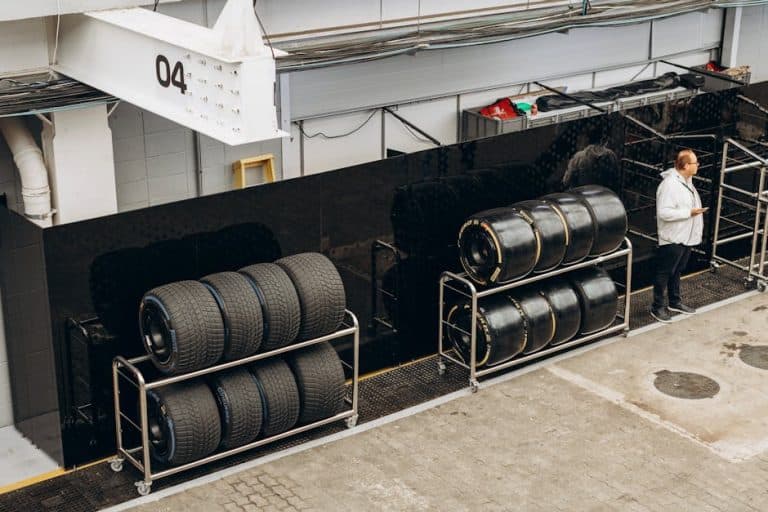
Most drivers check hot pressures and stop there. Tire temperatures (inner/middle/outer) tell you why grip is inconsistent.
- Tools: A probe-style pyrometer is ideal, but even an infrared gun is better than guessing.
- Target pattern (general): For many track tires, you want relatively even temps with slight inner bias on negative camber setups (exact targets vary by tire and car).
- Driving adjustment: If the outer shoulder is hottest, don’t immediately add camber—first check if you’re turning in too early and scrubbing the front tires with excess steering angle.
Track-day reality: A 2–3 psi pressure mistake can turn into a 5–10°C temperature imbalance and a car that feels “random” by lap 4.
3) Use Fuel Load as a Setup Tool (and a Consistency Test)
Fuel load changes balance, braking, and tire life. Instead of treating it as an inconvenience, use it intentionally.
- Baseline method: Do one session with a heavier fuel load (e.g., +15–20 liters over your usual) and one with your typical load. Compare your braking stability and mid-corner balance.
- What you learn: If the car is only “good” at one fuel level, your setup window is too narrow or your driving relies on a specific balance that won’t last in a race.
- Racecraft bonus: A driver who understands fuel-balance changes is less likely to overdrive early and cook tires.
Data point to watch: Compare corner entry speed on lap 2 versus lap 8 in both sessions. Consistency often improves more than raw lap time—until it becomes raw lap time.
4) Create a “Two-Lap Quali Routine” That Actually Works
Many club racers lose their best lap before it begins: incorrect warm-up pace, sloppy out-lap, or overheating tires. A simple two-lap routine can unlock pace reliably.
- Out-lap: Heat brakes progressively. Avoid big steering inputs that scrub tires. Build pace in the last 1/3 of the lap.
- Hot lap 1: Commit to clean inputs, not heroics. Most drivers over-attack the first braking zone.
- Hot lap 2: If tires are in the window, this is often fastest. If it’s slower, note where grip falls off—front? rear? only in long corners?
Quick check: If lap 1 is fastest and lap 2 drops sharply, you’re likely overheating tires or overdriving entries. If lap 2 is faster, your out-lap was too gentle.
5) Optimize “Aero for Free” with Ride Height Discipline and Sealing
You don’t need a wind tunnel to benefit from aero fundamentals. Many cars lose stability because ride height changes under braking and acceleration, or because air is leaking into places it shouldn’t.
- Ride height: Measure it consistently (same tire pressures, same surface). Even a few millimeters can change rake and high-speed balance.
- Sealing basics: Check front undertray gaps, damaged splitter edges, loose wheel-arch liners, and missing fasteners. These “small” issues can cause big changes at 160+ km/h.
- Real-world payoff: More stability through fast corners typically increases your confidence to stay on throttle earlier—often worth more than a power bump.
Workshop tip: Paint-pen mark critical aero fasteners so you can visually spot loosening between sessions.
6) Stop Guessing the Weather: Build a Grip Forecast from Track Temp
Ambient temperature is not the same as track temperature. Track temp influences tire pressure rise, grip level, and braking distances.
- Tools: A simple infrared thermometer pointed at the asphalt in the pits (and near the racing line if safe) before each session.
- Log it: Track temp + hot pressures + best lap + driver notes. After 3–4 events you’ll have a personal grip model.
- Actionable adjustment: On hotter track temps, you may need lower starting pressures and a calmer first two laps to prevent overheating.
Context: Mainstream reporting increasingly highlights how heat impacts motorsport performance and safety; for broader background on racing conditions and their real consequences, resources like The Guardian’s motorsport coverage can provide useful perspective beyond the paddock rumor mill.
7) Make One Change at a Time—But Use an A/B “Control Lap” to Validate
“One change at a time” is good advice, but it fails when your driving varies lap-to-lap. The fix is to create a repeatable control lap and compare like-for-like.
- Control lap definition: Pick a lap where traffic is clear and you execute your plan (brake points, gears, lines). Mark it in your notes.
- A/B method: Do 3 laps with Setup A, then 3 laps with Setup B (or tire pressure A/B). Compare the best “clean” lap from each set plus consistency (spread between laps).
- What to change first: Tire pressures, then alignment tweaks, then damping/ARB changes. Avoid stacking variables.
Rule of thumb: If the “improvement” only shows up in one corner and hurts two others, it’s likely not a net gain for race distance.
8) Practice “Delta Throttle” on Corner Exit (It’s Not Just ‘Full Throttle Earlier’)
Drivers often focus on when they reach full throttle. The faster insight is the rate at which you add throttle—especially on cars with limited-slip diffs or turbo torque spikes.
- Delta throttle concept: Think of throttle as a ramp. A smooth ramp keeps the tire at the limit; a spike breaks traction and forces a lift.
- Drill: On exits, aim for a consistent 1–2 seconds from maintenance throttle to full (adjust per corner). If you’re fighting wheelspin, lengthen the ramp.
- Data cue: Look for a clean, rising speed trace with no micro-lifts. Even without data, you’ll feel less correction at the wheel.
Example: In FWD cars, a calmer throttle ramp reduces inside-wheel spin; in RWD, it preserves rear tire temp and reduces snap oversteer when the diff locks.
9) Do a Post-Session “3-2-1 Debrief” (and Actually Use It Next Time)
Most drivers have great insights right after a session—and then forget them. A structured debrief turns feelings into a plan.
- 3 observations: What the car did (understeer entry, oversteer exit, brake vibration, etc.).
- 2 hypotheses: Why it happened (pressure too high, braking too late, overheating, diff behavior).
- 1 action: One specific change for the next session (start pressures -1 psi, later turn-in at Turn 4, smoother brake release).
Bonus: Keep a simple spreadsheet. After a season, patterns emerge—like which corners punish you when the track heats up, or which setup change consistently improves tire life.
Conclusion: Speed Comes from Process, Not Parts
Cutting lap time without buying power is absolutely realistic—if you treat performance like a system. Brake release, tire temperature management, fuel-load awareness, a repeatable quali routine, basic aero discipline, track-temp logging, controlled A/B testing, smarter throttle application, and structured debriefs add up quickly.
If you want the biggest payoff, start with tire temps + pressures and brake release mapping for your next event. They’re low-cost, highly measurable, and they make every future setup change more effective. Lasco Motorsport readers: keep it methodical, keep it safe, and let the stopwatch—not forum noise—tell you what works.