Why is heat management suddenly one of the biggest performance differentiators in motorsport?
Across nearly every discipline—track days, time attack, rally, endurance, touring cars—teams are discovering that “power” is often limited by temperature, not hardware. Hotter ambient conditions, longer stints, and tighter aero packaging all push cars toward thermal saturation: the point where coolant, oil, intake air, brakes, and tires can’t shed heat fast enough. Once you reach that point, performance drops quickly and reliability risk spikes.
The difference between a clean run and a compromised one often comes down to how well you manage heat during the lap, not just how much you can cool in the paddock. In practical terms: if your intake temps climb, your ECU pulls timing; if brake temps run away, you lose bite; if tire surface temps exceed the compound’s sweet spot, you slide and overwork the carcass; if oil thins out, pressure drops and bearings suffer.
What temperatures actually matter most (and what are realistic targets)?
Targets vary by platform and component spec, but these ranges are widely used starting points. If you can log these, you can manage them.
- Coolant: typically 85–105°C (185–221°F). Sustained >110°C is a red flag for many setups.
- Oil: often happiest around 95–125°C (203–257°F). Too cool increases wear; too hot thins oil and reduces protection.
- Intake Air Temperature (IAT): “as low as possible,” but pay attention to delta over ambient. A 20–30°C (36–54°F) rise is common; sustained 50°C+ rise usually costs power.
- Brake discs: depends heavily on pad/disc. Many track compounds like 350–650°C; endurance setups may tolerate higher. Above the pad’s window you risk fade or accelerated wear.
- Tire surface: compound-specific. Many performance street tires work around ~50–80°C; semi-slicks often like ~70–110°C; slicks can be higher. Your supplier’s data matters.
Actionable tip: Your “target” isn’t a single number—it’s a stable range. The goal is repeatable thermal behavior lap-to-lap, not a hero lap followed by heat-soak.
How do I know if I’m heat-soaking, and what does it look like on data?
Heat-soak shows up as performance decay within a session despite consistent driving. Here are common signs:
- Lap times drift slower by 0.5–2.0 seconds without traffic or mistakes.
- IAT climbs steadily and doesn’t recover on straights.
- Coolant/oil plateau high and keep creeping, especially after back-to-back push laps.
- Brake pedal gets longer or initial bite reduces after repeated heavy stops.
- Tire pressures rise aggressively (e.g., +4–8 psi) and grip falls off in the last third of the session.
Actionable tip: If you don’t have a full motorsport data system, start with OBD logging (IAT, coolant temp, ignition timing, throttle, speed) plus a handheld infrared thermometer for tires/brakes in the paddock. Consistency beats complexity.
What’s the most overlooked “free” heat-management upgrade for track cars?
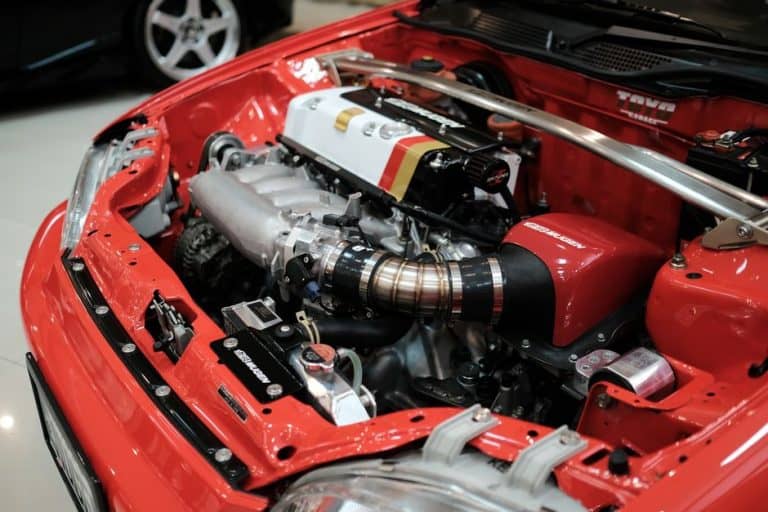
Airflow management—not just adding bigger radiators. Many cars have sufficient heat exchanger capacity but poor ducting, pressure management, or exit flow. The result is hot air recirculation and low pressure differential across the core.
Three high-impact, low-cost improvements:
- Seal the radiator to the support: use foam or rubber edging so incoming air can’t bypass the core.
- Create a clean exit path: hot air must leave the engine bay. Undertray venting, fender liners with exits, or controlled hood venting can reduce underhood temps.
- Prevent recirculation: ensure the fan shroud and ducting don’t pull hot bay air back through at low speeds.
Real-world example: Many grassroots endurance teams see coolant stabilize simply by sealing gaps around the radiator and improving exit airflow—often more effective than installing an oversized radiator that blocks other airflow.
How can I keep intake temperatures stable without spending big money?
IAT control is a blend of placement, shielding, and driving strategy. Even naturally aspirated cars can lose noticeable power when IAT climbs; boosted cars feel it sooner due to compressor heat.
- Prioritize cold air sourcing: draw from outside the engine bay (grille, headlight duct, cowl) and use a sealed airbox where possible.
- Heat shielding works when it’s reflective and spaced: reflective barriers plus an air gap beat thick “blankets” pressed against hot parts.
- Reduce underhood heat load: ceramic coating or proper exhaust wrap can help, but be careful—wrapping can trap moisture/heat and shorten component life if done poorly.
- Plan a “cooling lap” correctly: short-shifting can reduce exhaust energy and underhood temps while keeping airflow high.
Actionable tip: Log IAT and ignition timing. If timing is consistently pulled at the end of straights, you’re not “down on power”—you’re down on temperature control.
What’s the best way to manage brake temperatures for sprint vs. endurance driving?
Brake management is about staying in the pad’s operating window. Sprint driving can tolerate peakier temps; endurance needs stability and low wear.
For sprint sessions (time attack, short races)
- Choose a pad with high initial bite that tolerates short high peaks.
- Brake ducting is a “multiplier” if you’re overheating—direct air to the rotor hat/center, not just the face.
- Minimize dragging: a small amount of overlap or left-foot drag can keep rotors hot between corners—great for rally, often harmful on circuit if you’re already hot.
For endurance stints
- Run a pad with stable wear and consistent torque curve across temps.
- Manage peak events: one or two “panic stops” can push fluid toward boiling and compromise an entire stint.
- Use a temperature paint or strips on calipers/rotors periodically to verify your assumptions.
Data point to watch: If you’re cooking the front brakes, it’s often not just ducts—it may be front tire grip (forcing longer stops) or rear bias too conservative, shifting too much work forward.
How do tire pressures and heat interact, and what’s a practical pit-lane method to dial them in?
Tire performance is inseparable from heat. As tires heat, pressure rises; as pressure rises, contact patch shape changes; that changes slip angle behavior and temperature distribution. For many track compounds, a small pressure swing can change the car’s balance more than a suspension click.
A simple, repeatable method:
- Start with a target hot pressure recommended by the tire maker or proven by your logs.
- Record cold pressure and ambient before the session.
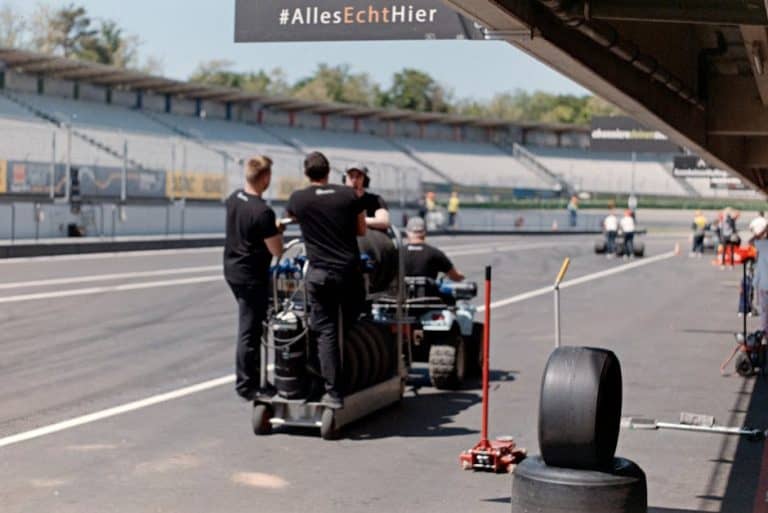
- Come in immediately after a push lap (no cooldown) and measure hot pressures and inner/middle/outer temps if possible.
- Adjust to target hot pressure first, then evaluate temperature spread across the tread.
Actionable tip: If the middle is hotter than edges, pressure may be too high (or camber too low for the load). If the inner edge is much hotter, you may have too much camber or too much toe for the duty cycle.
Are hot races becoming more common, and should teams plan differently now?
Many series and venues are experiencing more frequent high-heat weekends and heat spikes. Regardless of the underlying causes, the practical takeaway for racers is the same: build a thermal plan into setup and strategy. That means validating cooling capacity, planning driver hydration/fitness, and having contingency options (different ducting, grille blanks, fan control strategies, and tire pressure baselines).
For broader context on how extreme heat is affecting sports and event planning, mainstream reporting can be useful; for example, coverage and explainers from The New York Times often compile expert commentary and real-world cases that help frame how organizations adapt to hotter conditions.
What’s the smartest “thermal checklist” to run before a hot weekend?
- Cooling system health: pressure test, cap condition, no trapped air, fans functional, clean radiator fins.
- Oil control: verify oil grade for expected temps; consider an oil cooler if oil exceeds your safe range.
- Brake system: fresh high-temp fluid, pad thickness, rotor condition, ducting secured.
- Heat shielding: protect fuel lines, brake lines, and intake components from radiant heat.
- Spare consumables: extra coolant, brake fluid, hose clamps, and a spare cap—small items end weekends.
- Baseline data: last event’s temps and pressures; don’t arrive “blind.”
Conclusion: What’s the Lasco Motorsport takeaway on winning the heat battle?
Heat management is a performance system, not a single part. The biggest gains usually come from controlling airflow paths, logging the right temperatures, and setting targets for stability rather than peak numbers. When you treat temperature like a setup variable—just like damping, alignment, or gearing—you unlock consistency, protect components, and keep the car fast at the end of the session when others fade.
Build your plan around measurable ranges (coolant, oil, IAT, brakes, tires), make one change at a time, and validate it with repeatable laps. In hot races, the best “upgrade” is often the one that keeps your last lap as strong as your first.