Brakes are one of the few systems on your car that can feel “fine” right up until they’re suddenly not. And if you mix spirited weekend driving with daily commuting—or you’re doing the occasional track day—the usual advice (“change pads when they’re low”) doesn’t go far enough. Heat cycles, brake dust buildup, pad deposits, and fluid boil can quietly compromise braking performance long before you see a warning light.
This guide focuses on the less-talked-about side of mechanical services: the real-world brake issues that show up when parts get hot, cool, get hot again, and live in the messy mix of dust, moisture, and road grime. If you want predictable pedal feel, strong bite, and reduced long-term wear, these are the details that matter.
Why modern brakes fail “gradually” (until they don’t)
Most brake problems aren’t dramatic failures—they’re a slow slide into worse performance. Common “hidden wear” patterns include:
- Heat-cycled pads that glaze over and lose bite, especially after repeated hard stops.
- Boiled or moisture-contaminated brake fluid that causes a long pedal and inconsistent pressure.
- Rotor surface issues like uneven pad transfer (often mistaken for “warped rotors”).
- Sticking caliper slider pins that create tapered pad wear and overheating on one corner.
- Brake dust accumulation that speeds corrosion and can interfere with caliper movement over time.
In performance driving, the braking system can see rotor temperatures well above normal road use. Even on the street, repeated downhill braking or towing can raise temperatures enough to trigger pad fade or fluid issues—especially if the car’s maintenance schedule is based on “average” driving.
The underrated villain: brake dust and what it tells you
Brake dust isn’t just messy—it’s information. The amount, color, and distribution can clue you into what’s happening at each corner.
Actionable checks you can do in 2 minutes
- Compare front vs rear dust levels. Front-heavy dust is normal on many cars, but one wheel that’s much dirtier than the others can point to a sticking caliper or uneven pad compound behavior.
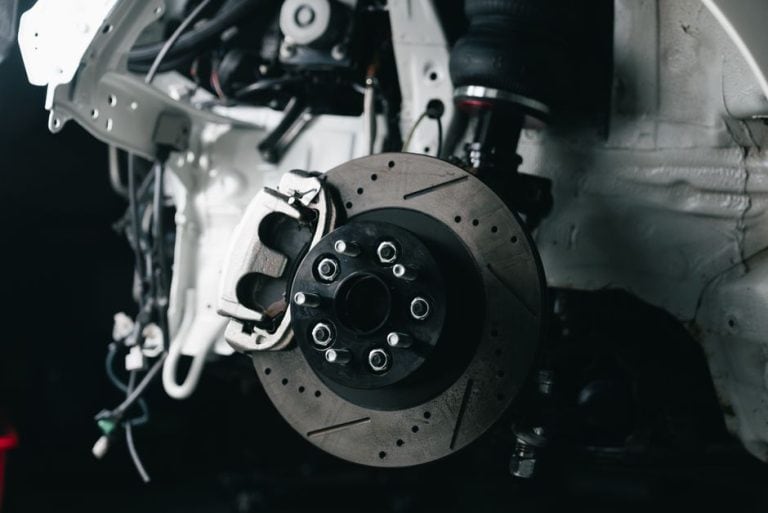
- Look for “rust rings” on the rotor. After rain, light surface rust is normal. But if one section stays rusty while the rest cleans up quickly, that can indicate the pad isn’t contacting evenly.
- Check dust texture. Very gritty, chunky residue may suggest the pad is breaking down under heat (or the rotor face is being abraded).
Mechanical takeaway: brake dust buildup plus heat can accelerate corrosion around caliper hardware. Over time, that can restrict pad movement, which increases heat further—creating a feedback loop that ends in noisy brakes, vibration, and uneven wear.
Heat cycles 101: what they do to pads, rotors, and fluid
“Heat cycle” simply means the brake components heat up under braking and cool down afterward. Repeated cycling changes materials:
- Pads: Some compounds harden or glaze when overheated, reducing friction and increasing stopping distances.
- Rotors: The rotor face can develop uneven friction layers if pads aren’t bedded correctly or if you hold the brakes at a stop when they’re extremely hot.
- Fluid: Brake fluid absorbs moisture over time (it’s hygroscopic). Water lowers boiling point and can create compressible vapor under hard braking—felt as a soft or sinking pedal.
Real-world example: a driver does three hard highway exits in a row, then sits at a long light with the brake pedal pressed firmly. That “hot clamp” can imprint pad material on the rotor in one spot. Later, the driver feels a wobble and assumes the rotor is warped. Often, it’s actually uneven pad transfer that can be corrected with proper service and, sometimes, a re-bedding process.
What “track-ready” braking actually means for street cars
You don’t need a race car to benefit from performance-minded brake servicing. Track-ready, in a practical sense, means your braking system is:
- Consistent: Pedal feel and bite are repeatable from the first stop to the tenth.
- Balanced: Left/right and front/rear braking effort isn’t being skewed by stuck hardware or mismatched parts.
- Thermally prepared: Pads and fluid can tolerate the heat you’re actually generating.
- Mechanically free-moving: Caliper slides, pad channels, and piston seals aren’t binding.
This is also a safety story. Public reporting and road-safety discussions frequently highlight how vehicle condition affects outcomes; for broader context on safety and transport issues, you can explore coverage and analysis from The Guardian, which often compiles research-driven reporting on roads, vehicles, and policy.
A brake service checklist most people skip (but shouldn’t)
If your “brake service” is only pads slapped in and rotors replaced, you’re leaving performance—and lifespan—on the table. Here’s a more complete, workshop-style checklist you can ask for (or perform if you’re qualified and safe to do so):
1) Measure, don’t guess
- Pad thickness (inner and outer): Inner pads often wear faster if sliders are sticky. A difference of 2–3 mm between inner/outer on the same caliper is a red flag.
- Rotor thickness: Compare to the minimum spec stamped on the rotor hat or listed by the manufacturer.
- Rotor runout: A dial indicator check helps separate true runout from pad deposit issues.
2) Clean and lubricate the right places (and only the right places)
- Slider pins: Clean, inspect the rubber boots, and use the correct high-temp brake grease.
- Pad contact points: Remove rust scaling on abutment clips and pad ears. This is where pads can bind and cause overheating.
- Don’t contaminate friction surfaces: Keep lubricant away from pads and rotor faces.
3) Flush brake fluid on a heat-based schedule
Many owners wait years to change fluid. If you do mountain drives, towing, or track sessions, consider a more frequent interval. Practical guideline:
- Daily driving: every 2 years is a common baseline.
- Spirited driving / occasional track: annually, or before a major event.
- Regular track use: potentially every few events depending on temperatures and fluid type.
Tip: if your pedal gets soft only after repeated hard braking and then “comes back” after cooling, that’s classic heat/fluid behavior—not something new pads alone will fix.
Choosing pads by use-case (not by hype)
Pad selection is one of the biggest causes of disappointment because marketing terms don’t map cleanly to your driving reality. Choose based on temperature window and street manners:
- Street-focused ceramic pads: quieter, low dust, but may fade sooner under repeated high-heat stops.
- Performance street pads: higher bite and better heat tolerance; usually more dust and sometimes more noise.
- Track-capable compounds: designed for high temps; can feel weak when cold and chew rotors if used on the street.
Real-world example: a driver fits an aggressive track compound for daily commuting. Cold mornings produce poor bite, and the driver pushes harder on the pedal—creating extra heat and uneven deposits. In the end, braking gets worse, not better. The right pad for the job is the fastest route to confidence.
“Warped rotors” vs. uneven pad deposits: how to tell the difference
The phrase “warped rotors” is popular because the symptom—steering shake or pedal pulsation—feels like something is physically bent. But in many cases, the rotor is dimensionally fine and the problem is uneven friction material transfer.
Signs that point to pad deposits
- Pulsation started after a very hot stop (track session, long downhill, emergency braking).
- Rotor surface shows patchy discoloration or “ghosting.”
- Issue improves temporarily after a series of moderate stops (re-balancing the transfer layer).
Signs that point to true mechanical issues
- Runout measurements exceed spec.
- Hub face corrosion or debris is present (a common cause after rotor replacement).
- Wheel bearing play or suspension issues accompany the vibration.
Actionable tip: if you’re replacing rotors, cleaning the hub face to bare metal and torquing wheel nuts evenly to spec can prevent “instant runout” that feels like a brake problem but starts at installation.
Two small upgrades that make a big difference (without going full race car)
- High-quality brake fluid: A fluid with a higher dry and wet boiling point can dramatically improve repeatability under heat, even on stock calipers and rotors.
- Brake cooling habits: After hard driving, do a short cool-down with minimal braking, then avoid sitting stationary with the pedal clamped hard on super-hot brakes. Use the handbrake only if appropriate for your vehicle (some rear setups can also bind when hot).
Conclusion: make brake performance predictable, not “hopeful”
Brake confidence isn’t about the biggest calipers or the most expensive pads—it’s about consistency. If you pay attention to brake dust patterns, respect heat cycles, flush fluid on a schedule that matches your driving, and ensure calipers and pads move freely, your braking will feel sharper and last longer.
If you’re preparing for a spirited driving event or you simply want your daily driver to stop the same way every time, a track-minded brake inspection is one of the best mechanical services you can invest in. It’s not glamorous—but it’s the difference between “it stops” and “it stops exactly how I expect.”