Predictive maintenance for enthusiasts: stop failures before they start
Modern mechanical service is shifting from “fix it when it breaks” to “measure it, predict it, prevent it.” For performance cars—especially those that see spirited road driving, autocross, dyno sessions, or track days—predictive maintenance is the difference between finishing a session and loading up with a limp mode warning. The goal isn’t to replace parts early “just in case”; it’s to use simple checks, data, and patterns to service smarter.
Below are nine specific, high-impact predictive maintenance moves that Lasco Motorsport clients can use to reduce failures, protect expensive components, and improve consistency. Each one is practical, measurable, and focused on real-world driving conditions, not generic commuter-car advice.
1) Build a “heat history” log (not just mileage)
Why it matters
Performance cars don’t age only by mileage—heat cycles do a lot of the damage. Track sessions repeatedly spike oil, coolant, transmission, and brake temperatures, accelerating fluid breakdown and hardening rubber seals.
Actionable steps
- Track three numbers after every hard event: peak oil temp, peak coolant temp, and peak brake temps (if you have sensors; if not, at least note brake fade/odor and ambient conditions).
- Record session length and ambient temp (e.g., “20 min session, 92°F ambient, oil peaked 265°F”).
- Use the log to set service intervals by heat exposure, not guesswork. Two cars with the same mileage can have wildly different needs depending on heat history.
Real-world example: A street-driven car that hits 240–250°F oil temps a few times a year can often run longer oil intervals than the same model that repeatedly sees 270–290°F on track. The second car should move toward shorter intervals and higher-temperature-resistant fluids.
2) Treat oil analysis as a “blood test” for your engine
Why it matters
Used oil analysis can identify early bearing wear (lead/copper), abnormal cylinder wear (iron), coolant contamination (sodium/potassium), fuel dilution, and even dirt ingestion (silicon). It’s one of the most cost-effective predictive tools in mechanical services.
Actionable steps
- Send a baseline sample after your next oil change interval so you have a reference for your engine.
- Resample after changes like a new tune, turbo upgrade, track event, or switch in oil viscosity.
- Watch trends, not single results: one report can be noise; three reports create a pattern.
Data point to know: Fuel dilution can rise significantly with frequent short trips, aggressive tuning, or repeated cold starts. If dilution climbs, viscosity drops—and bearing protection drops with it. Oil analysis helps you catch this before pressure or noise symptoms appear.
3) Use brake fluid moisture checks to schedule bleeding scientifically
Why it matters
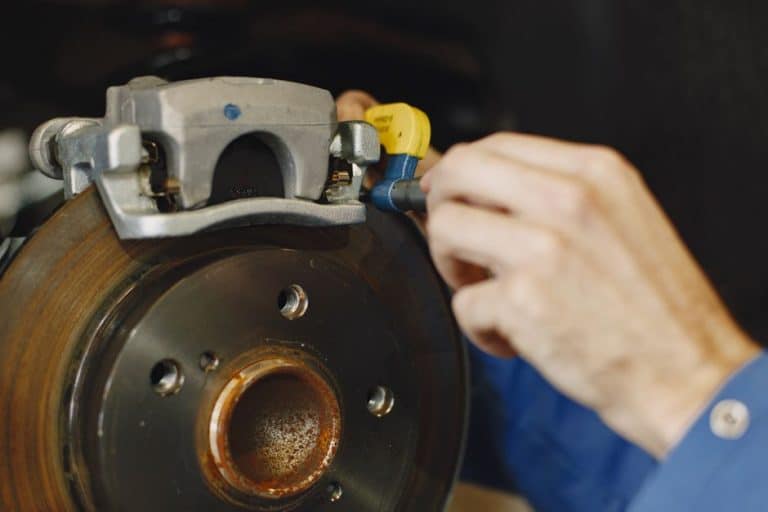
Brake fluid is hygroscopic—it absorbs moisture from the air. More water lowers the fluid’s boiling point, increasing the risk of a soft pedal or fade under heavy braking. Many drivers bleed brakes on a calendar, but moisture content is a better predictor.
Actionable steps
- Use a brake fluid tester (a simple handheld tool) to estimate moisture content.
- Plan a full flush when moisture approaches problematic levels or when you’ve had multiple high-heat events.
- Pair moisture checks with pad/rotor inspection: if the pads show taper or heat checking, your fluid has likely been stressed too.
Practical tip: If your pedal travel increases during long downhill braking or late in a track session, don’t just blame pads—test fluid and consider upgrading to a higher boiling point fluid aligned with your driving profile.
4) Add a quick “tire temperature map” to your alignment routine
Why it matters
Alignment isn’t just a static spec—it’s a dynamic setup that depends on tire, compound, pressure, and driving style. A simple tread temperature check (inside/middle/outside) after a hot session can reveal understeer/oversteer balance issues, poor camber, or incorrect pressures.
Actionable steps
- Use a probe or infrared thermometer and measure inside/middle/outside temps on each tire immediately after a session.
- Adjust pressures first if the center is hottest (often overinflation) or edges are hottest (often underinflation or insufficient camber).
- Adjust alignment next if the inside/outside gradient persists across sessions at proper pressures.
Real-world example: If the outside shoulder of the front tires is consistently hotter and wearing faster, adding negative camber (and verifying toe) can improve cornering grip and reduce shoulder rollover—saving tires and improving lap-to-lap consistency.
5) Catch “silent” cooling system failures with pressure decay testing
Why it matters
Many cooling issues don’t show up as obvious puddles. Small leaks can evaporate on hot components, and a slightly weak cap can lower system pressure enough to cause boiling at lower temperatures—especially on track.
Actionable steps
- Perform a cooling system pressure test and watch for pressure decay over time.
- Test the radiator cap (cap pressure is part of the system’s boiling protection).
- Inspect common leak points after pressurizing: hose clamps, plastic tanks, water pump weep holes, heater core connections.
Actionable tip: If you see intermittent coolant smell with no visible leak, request a pressure test before replacing random parts. It’s a low-cost diagnostic that can prevent an overheating event.
6) Track misfires by cylinder under load—don’t wait for a check engine light
Why it matters
Performance driving exposes ignition weaknesses quickly. Marginal coils, plugs with excessive gap, heat-soaked wiring, or fueling irregularities can cause load-related misfires that may not immediately trigger a persistent fault code—but they will cost power and can raise exhaust gas temperatures.
Actionable steps
- Log misfire counts and fuel trims using a scan tool or data logger during a controlled pull (where safe/legal).
- Replace spark plugs by condition and usage, not only by factory intervals—high boost and track heat often shorten plug life.
- Swap-test coils if misfires follow a component from one cylinder to another.
Real-world example: A tuned turbo car may feel “fine” on the street but start breaking up at high RPM on track. Data logging can reveal a specific cylinder misfire pattern, guiding a targeted coil/plug replacement rather than a costly guessing game.
7) Make transmission and differential service interval depend on torque, not ego
Why it matters
Gear oil shears and loses protective properties faster when torque and heat rise. Upgraded power levels, stickier tires, and track sessions put loads on the drivetrain far beyond normal commuting assumptions. Shortening intervals is often cheaper than replacing synchros, bearings, or a ring and pinion.
Actionable steps
- Set a “power/usage interval”: higher torque + track use = more frequent fluid changes.
- Inspect drain plug magnets for debris. A light paste is normal; flakes or chunks are not.
- Note shift quality changes (notchiness, synchro grind, delayed engagement) and treat them as early warning signals.
Data point: Even without exact lab testing, visual inspection of drained fluid (burnt smell, metallic shimmer, dark discoloration) paired with magnet inspection provides a practical, repeatable drivetrain health check.
8) Use battery and charging “load tests” to prevent mystery electrical issues
Why it matters
Performance cars often run added electrical loads: fuel pumps, fans, data loggers, dash displays, aftermarket ECUs, and audio systems. A battery can show acceptable voltage at rest yet fail under load, causing intermittent starting, sensor glitches, or ECU undervoltage events that look like mechanical problems.
Actionable steps
- Perform a proper battery load test, not just a voltage check.
- Verify alternator output at idle and with accessories on.
- Inspect grounds and voltage drop across main cables—poor grounds create “ghost” faults.
Practical tip: If your car intermittently throws unrelated fault codes (throttle, cam sensor, ABS) after sitting or after a track day, rule out undervoltage early. It’s one of the most overlooked causes of “random” problems.
9) Schedule a “rubber and mounts” audit based on age and exposure
Why it matters
Hoses, bushings, engine mounts, and suspension isolators degrade with time, heat, and chemical exposure—even if mileage is low. When rubber components fail, the symptoms can masquerade as bigger issues: wheel hop, vibration, torque steer, clunks, or unstable braking.
Actionable steps
- Inspect for cracks, swelling, and seepage on coolant hoses, vacuum lines, and intercooler couplers.
- Check mounts for collapse (excess drivetrain movement) and bushing tears (control arms, subframe, sway bar end links).
- Use paint-mark “witness lines” on key fasteners after service; if the line shifts, you’ve got movement or loosening that needs attention.
Real-world example: A car that suddenly feels unstable under braking after a wheel/tire upgrade may not need new rotors first—it may have worn control arm bushings allowing toe change under load. A bushing audit can prevent chasing the wrong problem.
What makes this approach “predictive” (and why it’s trending)
Across industries, predictive maintenance is growing because it reduces downtime and avoids catastrophic failures. Even outside automotive, major outlets have discussed how data-driven maintenance can cut costs and improve reliability—concepts that translate directly to enthusiast cars when you start logging temps, analyzing fluids, and testing systems under load. For additional context on how predictive maintenance is being applied broadly, see New York Times reporting on data-driven maintenance trends.
Conclusion: turn mechanical service into a performance advantage
For track-capable street cars, the most expensive repairs often start as small, measurable changes: hotter temps, moisture in fluid, a subtle pressure decay, a rising wear metal trend, or a weak battery under load. The nine moves above aren’t about over-servicing—they’re about servicing with evidence.
If you want Lasco Motorsport to help you build a predictive maintenance plan tailored to your vehicle and usage—street, track, or mixed—start with a heat history log and one fluid analysis. From there, we can prioritize the checks that prevent the failures you’re most likely to experience, before they cost you a weekend (or an engine).