Why “early fault detection” is the new maintenance battleground
Modern vehicles are rolling networks: dozens of control modules, thousands of parameters, and a constant stream of diagnostic trouble codes (DTCs) hiding in the background long before a dashboard light appears. That changes how smart owners and fleets approach mechanical services. Instead of waiting for a breakdown, many are now choosing data-driven diagnostics—tools and strategies designed to spot trends like weak battery voltage, misfire counters creeping up, abnormal fuel trims, or DPF (diesel particulate filter) regeneration issues before they become expensive failures.
This article compares three practical options you can use today—basic OBD2 plug-in scanners, connected telematics, and workshop-grade diagnostics—and shows where each wins (and where it can mislead you). The goal: reduce downtime, avoid parts cannon repairs, and make mechanical servicing more predictable.
Option 1: Basic OBD2 plug-in scanners (the budget-friendly starting point)
What it is
Handheld OBD2 scanners and phone-based dongles plug into the OBD port and read generic codes (and sometimes limited live data). Prices typically range from low-cost units to mid-tier devices with app subscriptions.
Where it excels
- Fast triage: If the check engine light comes on, you can quickly identify whether the issue is likely emissions-related (e.g., P0420 catalyst efficiency) or something that requires immediate action (e.g., misfire codes).
- Basic live data: Some units read coolant temperature, short/long-term fuel trims, O2 sensor voltage, and RPM—useful for spotting obvious anomalies.
- Cost-effective for simple vehicles: Older or less complex cars often respond well to basic code reading.
Where it falls short (and how it can cost you money)
- Generic-only blind spots: Many faults sit in manufacturer-specific modules (ABS, airbag, body control, transmission) that cheap scanners can’t access. You may see “no codes” while a module stores critical pending faults.
- Parts-cannon temptation: A code is not a diagnosis. Example: P0171 (system too lean) could be a vacuum leak, MAF sensor drift, low fuel pressure, exhaust leak upstream, or even a software adaptation issue.
- Limited context: Without freeze-frame detail, mode 6 data, and bidirectional tests, you can’t confirm root cause confidently.
Actionable tips if you use a basic scanner
- Record freeze-frame if available (RPM, load, coolant temp). It matters.
- Look at fuel trims at idle vs 2,500 rpm: big trim at idle often suggests a vacuum leak; big trim at higher load can suggest fueling restrictions.
- Don’t clear codes immediately. Clearing erases evidence and resets readiness monitors, which can complicate emissions testing.
Option 2: Connected telematics (always-on monitoring for patterns)
What it is
Telematics devices (or OEM connected services) collect ongoing vehicle data—sometimes including DTCs, battery voltage, trip profiles, harsh braking, and maintenance reminders—then send it to an app or dashboard. This is especially relevant for performance vehicles, high-mileage commuters, and fleets that can’t afford unexpected downtime.
Where it excels
- Trend detection: The biggest advantage is not a single code—it’s the trajectory. For example, a battery that drops below healthy resting voltage repeatedly can indicate parasitic draw, a weak battery, or charging issues long before you get a no-start.
- Usage-based maintenance: Service intervals can align with actual duty cycle. Short trips, heavy idling, towing, and track use accelerate wear far beyond “every 10,000 miles.”
- Remote oversight: Fleets can schedule service proactively when a vehicle shows early indicators, not when it breaks down on the road.
Where it falls short
- Data without depth: Many systems read limited P-codes but can’t run manufacturer-specific routines, calibrations, or component actuations.
- Signal-to-noise risk: Drivers can be overwhelmed by alerts (“urgent” warnings for intermittent or low-severity faults). A good system needs sensible thresholds.
- Privacy and ownership considerations: Decide who owns the data and how it’s used—especially for employee-driven vehicles.
Real-world example: catching a charging fault early
A common scenario: telematics logs show average running voltage slowly trending down (e.g., from ~14.2V to ~13.4V under similar conditions). No dash warning yet. That pattern can indicate alternator deterioration, belt slip, or poor grounds. Fixing it early avoids a roadside breakdown and secondary issues like low-voltage module faults (which can create a cascade of misleading DTCs).
Actionable tips if you adopt telematics
- Set alerts for battery voltage (resting and running), coolant over-temp, and repeated misfire events if supported.
- Use telematics to prioritise workshop time: group vehicles by severity and schedule diagnostics before parts ordering.
- Pair telematics with a shop that can interpret the story behind the numbers, not just read them.
Option 3: Workshop-grade diagnostics (the gold standard for accurate repairs)
What it is
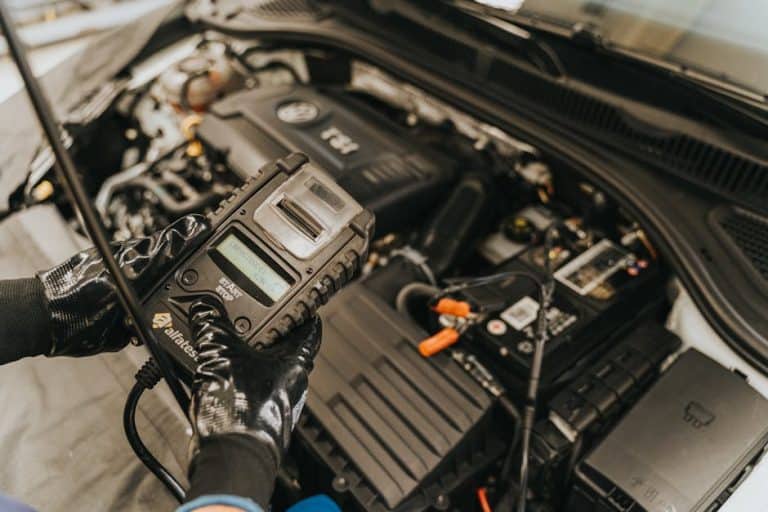
Professional diagnostics combines OEM-level scan tools or advanced multi-brand platforms with proper test equipment: oscilloscopes, smoke machines, fuel pressure gauges, exhaust backpressure tools, and battery/charging analyzers. It also includes service information access (wiring diagrams, technical bulletins, guided test plans).
Where it excels
- Bidirectional control: Command a purge valve, throttle body adaptation, cooling fan stage, injector balance test, or DPF regen—critical for confirming whether a component works under load.
- Module-wide visibility: Read manufacturer-specific codes across powertrain, ABS, SRS, body modules, and transmission.
- Root-cause confidence: Combining live data, mode 6, waveform analysis, and physical tests reduces “guesswork” parts replacement.
Where it can feel “more expensive” (but often isn’t)
Workshop diagnostics may have a higher upfront fee than a DIY code read, but it often prevents multiple wrong parts purchases. As a simple rule: if a fault could plausibly have three or more causes, a proper diagnostic workflow is usually cheaper than trial-and-error.
Practical data point: why accurate diagnosis matters
Many owners underestimate the cost of misdiagnosis. One wrong oxygen sensor, MAF, or coil pack replacement can exceed the price of a structured diagnostic session—especially on modern vehicles where access time and calibration steps add labour. Accurate fault isolation also helps avoid repeat visits, which are costly for both customers and workshops.
Actionable tips to get the most from a diagnostic visit
- Bring details: when it happens (cold start, hot idle, under boost, after refuelling), how often, and whether driving style changed.
- Don’t clear codes before your appointment; keep the evidence intact.
- Ask for results in plain terms: what was tested, what was ruled out, and what data supports the recommended repair.
Comparison: which approach suits which driver?
Best for budget-conscious owners with occasional faults
Basic OBD2 scanner is a sensible first step if your vehicle is older, the issue is straightforward, and you treat codes as clues—not conclusions. It’s also useful for confirming readiness monitors after repairs (where permitted) and checking for pending codes.
Best for high-mileage drivers, performance builds, and fleets
Telematics shines when you need to catch patterns early: repeated low-voltage events, overheating trends, intermittent misfires, or unusual trip behaviour. It’s not a substitute for workshop diagnostics, but it is excellent at deciding when to book in.
Best for complex, intermittent, or safety-related faults
Workshop diagnostics is the correct choice for anything involving transmission faults, ABS/SRS warnings, drivability issues that come and go, or repeated “same code returns” scenarios. It is also the best route when software updates, calibrations, or module programming are involved.
A modern strategy: combine tools instead of choosing just one
The smartest approach is often layered:
- Telematics (or OEM connected services) to flag patterns early.
- Basic OBD2 for quick owner-side triage and communication.
- Workshop diagnostics for confirmation, repair validation, and calibration.
This layered model mirrors how aviation and industrial maintenance evolved: continuous monitoring plus expert intervention when trends or thresholds are crossed.
Why this matters right now: fewer surprises, lower emissions, less waste
Early detection doesn’t just protect your engine—it reduces waste and unnecessary parts replacement. Better maintenance decisions can also lower emissions by keeping systems like catalysts, EGR, and DPF functioning correctly. For broader context on how transport emissions and policy are being discussed in the public sphere, reputable reporting like The Guardian’s climate and transport coverage can be a useful reference point when weighing the bigger picture beyond your own garage.
Conclusion: the “best” diagnostic approach depends on your risk and complexity
If you want the quickest and cheapest insight, an OBD2 scanner is fine—provided you don’t confuse codes with causes. If you value prevention and operate in high-use conditions, telematics adds the missing layer of trend awareness. And if you need repairs done right the first time—especially on complex or intermittent faults—workshop-grade diagnostics is the most reliable path.
For drivers and fleets that want fewer breakdowns and more predictable mechanical servicing, the winning move is not choosing one tool—it’s building a workflow that turns vehicle data into confident, verified repairs.